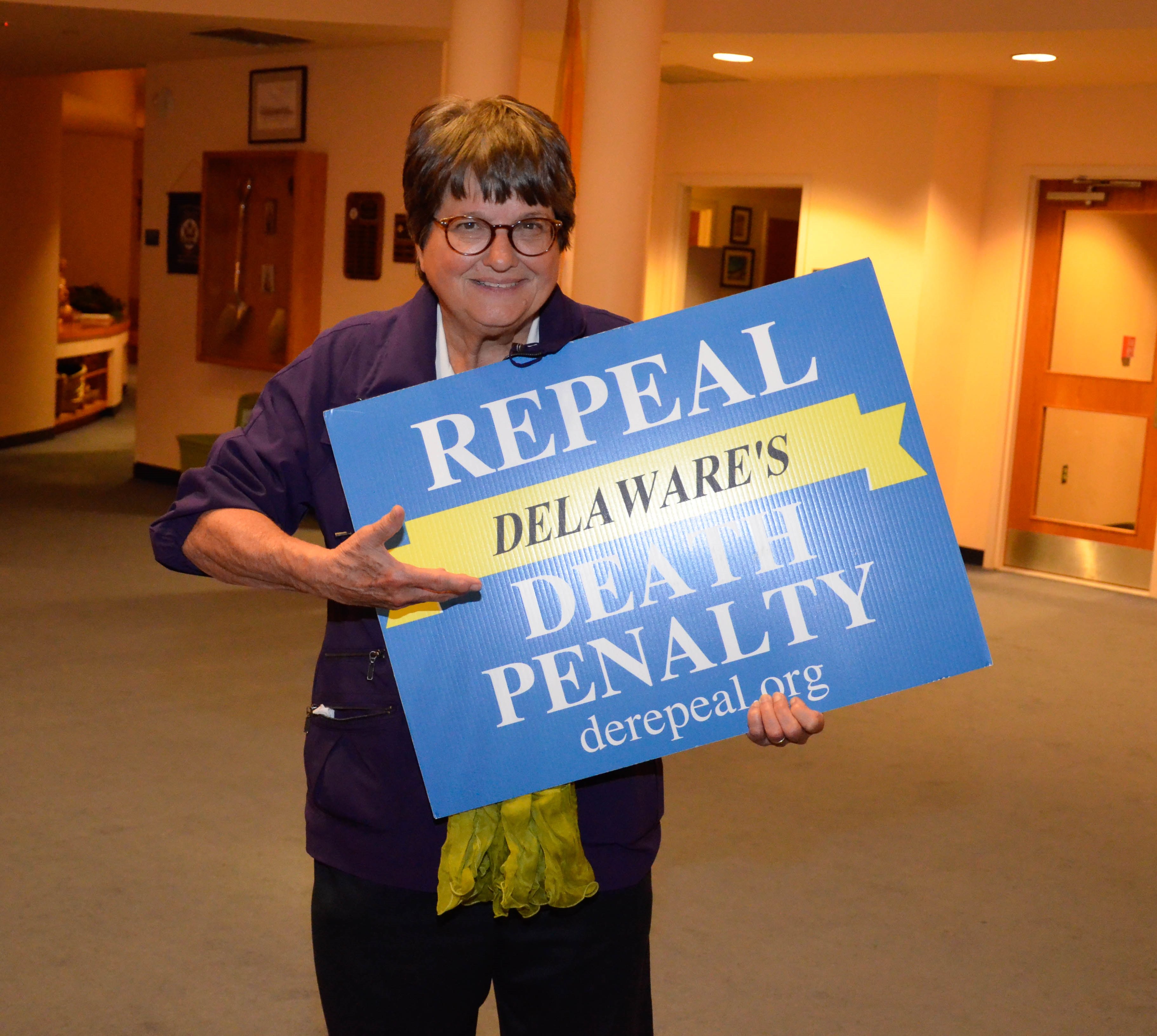
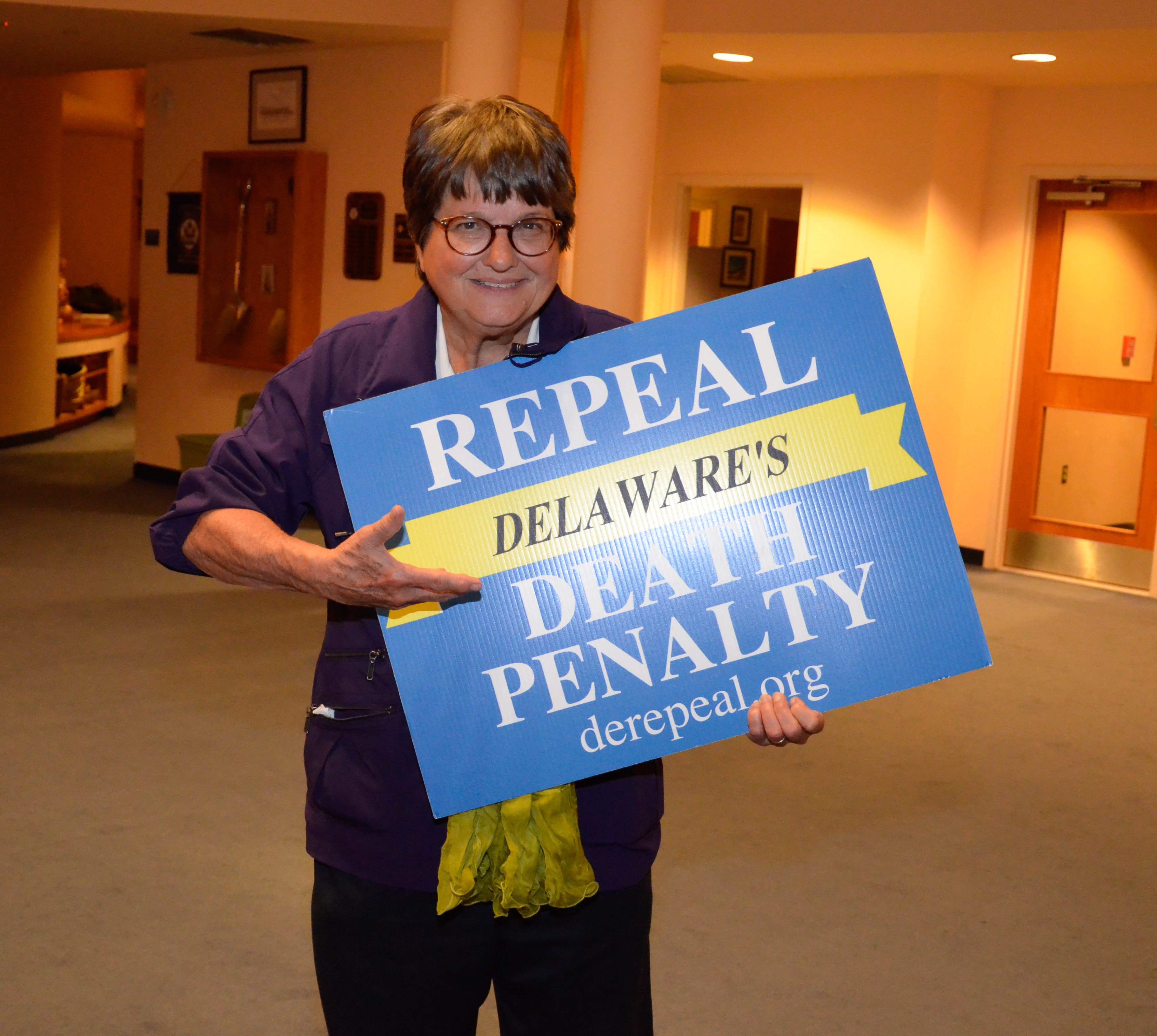
LOBBY DAY with IMAC on Tuesday, 4/8 in Dover.

Join the Interdenominational Ministers Action Council (IMAC) for a rally and lobby day Tuesday April 8th in Dover.

Rev. Beamen will lead a delegation of IMAC members and others who want to see the death penalty repealed in our state. Please join IMAC and the DE Repeal Project on this important lobby day.

TIME: Tuesday, April 8th — 11:45am to 2pm (stay longer if you are able)

GATHER at Wesley United Methodist Church — 209 South State Street, Dover, DE 19901.

RSVP to Abe Bonowitz at abe@abolition.org or 800-973-6548

PLAN:

  • There will be light snacks and we will receive a brief update on the campaign at Wesley United Methodist Church.
  • We will then march together the short distance from the church to Legislative Hall where we will pray together before entering the building. BE SURE TO BRING A PHOTO ID to get through security.
  • We will visit legislative leaders and then be present together as a group inside Legislative Hall as legislators and others enter the House Chamber.
  • Bring a friend, your photo ID, and wear comfortable shoes. The Delaware Repeal Project will provide materials to hand to our legislators.

Comment on CNN’s 3/30/14 Death Row Stories

Comment on CNN’s Death Row Stories from Richard Kiger

Tonight (Duckett [the death row inmate]) is interesting if only because it suggests that some on death row may be there for a good reason. The prosecutor this time did not seem to be as irresponsible as in earlier episodes. Actually, he was pretty decent. There are still problems with Brady material, questionable evidence from a lab (the FBI), unreliable witnesses, what is probably poor training of officers with respect to gathering evidence, and credibility issues.

I am a little surprised that Frank [the investigator] went to Edna Buchanan [the journalist] when he did and that she published without checking things out more carefully. It’s understandable she feels burned and his credibility is now at issue, at least in terms of his judgment and procedural skills. It also troubles me that the defendant seemed, to me, a little cavalier about the situation during the interview.

The allegedly related case in the neighboring county is interesting also. The evidence of misconduct seems pretty thin in terms of what we were told. Can his wife testify against him? I don’t know. There may be a disqualification here because they were married at the time. On the other hand, it does not appear that he told her anything, but, rather, that she observed something, that is, he came home with tangible items that she saw and this made her wonder what he had done. That could be a critical distinction. If she can testify, it remains a good question whether she has a motive to get rid of him, and we don’t know based on what we have been told.

The defense lawyer was a poor choice, it seems. It sounds as though he didn’t do much of anything. On the other hand, what did he have to work with, that is, did he have the resources to conduct discovery and perhaps hire a private detective (something hinted at by the woman who recanted and then un-recanted). Mounting a defense to a case is very expensive; all litigation is expensive. This is one of the problems with a public defender as the defense lawyer: you may be getting a dedicated advocate who is very experienced and knowledgeable, but who is hamstrung by lack of resources to do these very things. Some public defenders are not much, but many are very good lawyers who do their best and work for justice for their clients. I am not knocking PDs, but pointing out that the system does not always allow them to do the kind of job they would like to do.

When you put all these issues side by side, the case against Duckett seems pretty weak and it is natural to wonder if there was a miscarriage of justice. Frank’s misgivings about his innocence are problematic. As individuals, we are all entitled to our opinions as to whether someone is guilty. That’s not the point in a trial. The point is, did the government carry its burden to play by the rules and so present the jury with the evidence it needed to decide if the defendant was guilty beyond a reasonable doubt. I think we are entitled in this case, as presented, to conclude that the system was flawed and so Duckett should not have been convicted. Whether he is guilty of some other crime is irrelevant to this crime.

This brings up another issue. If there is a case against him in the other matter, why does prosecution in that case depend on whether he is set free in the case that was tried to the audience tonight? The answer, of course, is money, but that is cold comfort to the family of the girl who was killed. Is it not cruelly inconsistent to say that the family of the one girl deserve closure, but the family of the other girl can wait another 26 years before they get the same closure? That just doesn’t wash.

All in all, this is an interesting episode because the person on death row appears to deserve to be there, but not for the crime that brought him there. I take that to be the point of tonight’s episode, but if so, the presentation may have been a little subtle for the point that needs to be made. We remain where we have been, presented with a flawed system that is untrustworthy when it comes to convicting people for crimes they are alleged to have committed. I am not ignoring or minimizing the importance of many other reasons to abolish the death penalty, but merely trying to focus on the issue presented.

Interdenominational Ministers Action Council calls for repeal of Delaware’s death penalty

ImageRev. Lawrence Michael Livingston outlines IMAC’s support of Senate Bill 19, the bill calling for repeal of Delaware’s death penalty. He cites bias, harm to families, risk of executing an innocent, and morality as reasons Delaware legislators should repeal the death penalty and replace it with life without parole. Check out the article that appeared 3/30/14 in the News Journal.

Gov. Bill Richardson Press Conference Remarks

Governor Bill Richardson, the former Governor of New Mexico, came to Delaware to advocate for Senate Bill 19, the bill to repeal the death penalty. The following are his remarks from a press conference at Legislative Hall in Dover, DE on March 27, 2014.

GOV. BILL RICHARDSON PRESS CONFERENCE REMARKS
March 27, 2014

I am honored to be here in Dover today, capital of our country’s “First State.”

It’s my first visit to your beautiful Legislative Hall and while it is physically smaller than our “Round House” in Santa Fe, the issue before you—life or death—is as big and as important as it gets.

I am here to support the effort to repeal Delaware’s death penalty, Senate Bill 19.

I’d like to thank the bill’s sponsors for hosting me today:  Sen. Karen Peterson (D) and House prime sponsors, Rep. Darryl Scott (D) and Rep. Joe Miro (R), as well their other 11 House co-sponsors, many of whom are here with us today.

That’s 13 House sponsors, Democrats and Republicans, out of 21 votes needed for House passage.

I commend these sponsors for their work.

As many of you know, just over five years ago I signed into law the repeal of the death penalty in New Mexico.

Throughout my adult life, I had been a firm believer in the death penalty as a just punishment–albeit, only in very rare instances and only for the most heinous crimes.

But during my two terms as Governor of New Mexico, I started to challenge my own thinking on the death penalty.

The issue became more real to me because I knew the day would come when one of two things might happen: I would either have to take action on legislation to repeal the death penalty, or more daunting, I might have to sign someone’s death warrant.

The prospect of either decision was extremely troubling. But I was elected by the people of New Mexico to make just that type of decision.

In the past, I had believed that the death penalty served as a deterrent to some who might consider murdering a law enforcement officer, a corrections officer, or a witness to a crime. But people continued to commit such terrible crimes even in the face of the death penalty.

Let’s be candid here — there are decent, responsible people of good conscience on each side of this vitally important public policy issue. And yes, they disagree strongly.

However, what we cannot disagree upon is the finality of this ultimate punishment. Once a human being is executed, that act cannot be reversed.

Regardless of my personal opinion about the death penalty, I did not at that time nor do I at this time have supreme confidence in the infallibility of our criminal justice system as the final arbiter of who lives and who dies.

If the state—in this case, Delaware—is going to take upon itself this awesome responsibility—life or death—then the system to impose the death penalty must be perfect and can never, ever be wrong.

But the reality is that our system is not perfect—far from it. In fact, the system is inherently defective. DNA testing conclusively has proven that. In some cases, new evidence is brought to bear years after a verdict has been rendered. Witnesses recant their testimony.

The fact is that innocent people have been put on death rows and put to death all across the country.

It also bothers me greatly that minorities are overrepresented in the prison population across our country and on death row.

According to the NAACP’s Legal Defense Fund, Delaware has the highest minority population on death row of any state, at 78%.

Furthermore, a study out of Cornell University found that in Delaware, a black defendant who kills a white victim is more than 6 times as likely to receive a death sentence than a black defendant who kills a black victim.

While I was considering whether to sign or veto the death penalty repeal law in New Mexico, I invited people to contact me with their views. I heard compelling arguments from family members who had lost loved ones and from law enforcement officers concerned about their on-the-job safety.

But I also heard equally compelling arguments from members of the clergy as well as from family members who also lost loved ones and from law enforcement officers who urged me to sign the repeal in New Mexico.

I respected everyone’s opinions and took their experiences to heart, as I am certain that all Delaware state legislators are doing right now.

As the Delaware House of Representatives considers Senate Bill 19, I would like to emphasize that repeal of the death penalty would actually keep Delaware families and communities safe.

Senate Bill 19 is a tough bill:  it will result in the state’s worst criminals being sentenced to life in prison without the possibility of parole. They will never get out of prison. They will never threaten our communities again. Those convicted of murder will die in prison.

Since we repealed the death penalty in New Mexico, we have seen no big upswing in murder overall nor has there been a huge upswing in the death of law enforcement officers.

In fact, our murder rate is down significantly, and let me add that not a single legislator who voted to repeal the death penalty in New Mexico lost his or her seat in a re-election bid because of that vote.

More than 144 death row inmates have been exonerated across America since 1973—including four (4) New Mexicans—a fact that none of us can ignore.

I feel deeply about this issue.

Since leaving the governorship of New Mexico, I have become Co-Chairman of the International Commission Against the Death Penalty, traveling the world to make the case against its use.

Many of the countries that continue to support and use the death penalty are also the most repressive nations in the world, including China, North Korea, and Iran. That is not good company for the United States or Delaware.

In a society that values individual life and personal liberty above all else, where justice and not vengeance is the singular guiding principal of our criminal justice system, the potential for wrongful conviction and, God forbid, execution of an innocent person, stands as anathema to our very sensibilities as human beings.

That’s why I am here in Delaware today—to urge members of the State House of Representatives to release Senate Bill 19 from committee and to bring it forward for a full House debate and an up or down vote.

At the very, very least, Delaware deserves a vote on this important piece of legislation. It’s a matter of life or death.

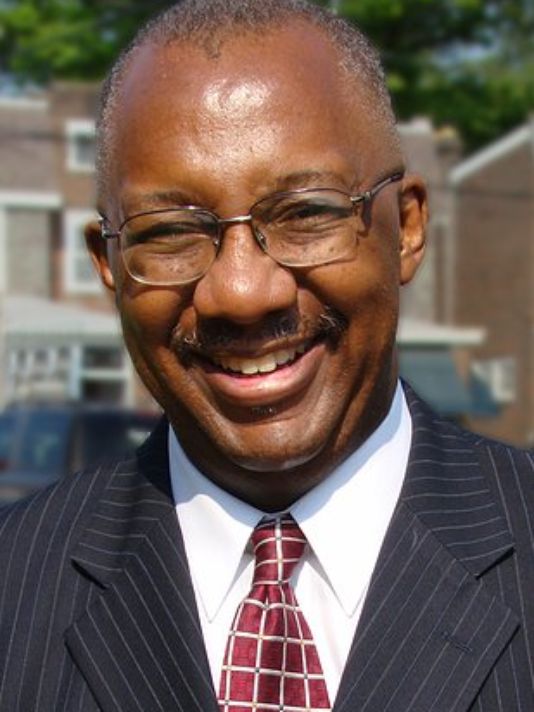
Death Penalty is not an effective way to protect law enforcement officers

The Delaware Repeal Project recently compiled data regarding the death penalty and deaths of law enforcement officers. The findings indicate that:

  • The presence or absence of the death penalty has no bearing on law enforcement deaths by homicide.
  • States that have ended the death penalty tended to have fewer law enforcement deaths by homicide after their states ended the death penalty, confirming that the death penalty is not an effective method for protecting law enforcement officers from being killed.

Check out the full report here.

DCODP Monthly Meeting, Monday 3/24/14 at 5:30pm

How can we keep the momentum going after Sr. Helen Prejean’s visit? Add your thoughts at our monthly DCODP meeting, this Monday 3/24/14 at 5:30 pm. LOCATION: Wilmington Friends Meeting House, 1st floor Social Room, 401 N. West St, Wilmington, DE 19801. Park in the parking lot on the 5th Street side or on the street. Ring the doorbell at the West Street entrance. Call 302-379-0488 for info. All are welcome!

LOBBY DAY in support of SB 19 at Legislative Hall in Dover on Tuesday 3/18/14!

ImageIn addition to her three speaking events, Delaware Repeal will host a lobby day with Sister Helen at Legislative Hall. Your participation in this event is a critical step in helping us pass Senate Bill 19. Join us in Dover to meet with your legislators and to be a part of the large number of people saying Senate Bill 19 deserves a vote.


March 18th
11:00 am –  Rally with Sister Helen at Christ Episcopal Church, 523 S State St., Dover, DE
12:00 pm – Walk over to Legislative Hall to lobby your legislator in support of the bill.
Contact Sean Dwyer (Sean@derepeal.org) with any questions.

With only a few months left in the legislative session, now is the time for us to repeal the death penalty. Join Sister Helen and The DE Repeal Project to make sure that Senate Bill 19 gets the vote it deserves.

Sr. Helen Prejean returns to Delaware for 3 events in March!

Sister Helen Prejean, author of Dead Man Walking, will return to Delaware this month!Image
Spread the word about these 3 events and remember to bring a friend.

Sister Helen’s book helped spark a national dialogue around the death penalty. She continues her work today as a prominent death penalty repeal activist working to change hearts and minds everywhere she goes. Her advocacy work has been an inspiration to many within this movement, and we are honored to have her back to help us end the death penalty in Delaware.

Sister Helen last came to our state in October, where she held a press conference, spoke to hundreds of Delawareans, and hosted a breakfast with legislators. If you missed her last visit, we promise that you don’t want to miss her again.

  • Sunday, March 16th, 7:00pm… St. Joseph’s Church 371 E. Main St., Middletown, DE Lenten Supper at 5:30. If you would like to attend the supper, please email mwinterbottom@stjosephmiddletown.com
  • Monday, March 17th, 7:00pm Epworth United Methodist Church 19285 Holland Glade Rd. Rehoboth, DE
  • Tuesday, March 18th, 7:00pm Delaware State University 1200 N. Dupont Rd., Dover, DE Luna Mishoe Science Center in room 117.

Bethany Beach Church to host panel on the death penalty Thursday 3/13 at 7pm

SaintImage Ann’s Catholic Church, 691 Garfield Parkway, Bethany Beach, Delaware, will host a free adult education panel on the death penalty this Thursday, March 13th at 7:00pm.


Speakers include:  

  • Brian Boyle, Campaign Manager from the Delaware Repeal Project, will speak about Delaware’s death penalty and current legislation.
  • Kristin Froehlich, whose brother was murdered, is the current Board President of Delaware Citizens Opposed to the Death Penalty. She will speak about how the death penalty harms victims’ family members.
  • Barbara Lewis will speak about her experience as the mother of former death row inmate Robert Gattis, whose 1992 death sentence was commuted to life in prison without parole.
  • Rev. Walt Everett, whose son was murdered, will speak about forgiveness.

Check out the recent article in the Coastal Point newspaper.

Please spread the word to friends and contacts in that area. Invite a friend who may be ambivalent or who supports the death penalty. Everyone will learn something.

For more information, call (302) 539-6449.

Watch CNN’s Death Row Stories this Sunday, 3/9/14 at 9:00pm ET.

Watch CNN’s Death Row Stories this Sunday, 3/9/14 at 9:00pm ET.

“DEATH ROW STORIES” ON CNN AT 9 PM THIS SUNDAY EVENING, March 9th. The first episode of the series will focus on how Edward Lee Elmore, a 23-year-old African-American handyman, was charged with the murder of a well-to-do white woman in Greenwood, S.C., in 1982. The jury spent less than three hours deliberating before finding him guilty, and it wasn’t until legal intern Diana Holt began investigating his case that new evidence of his innocence emerged